Thursday, 23 May 2019

Most Test Worthy Hypotheses

Explain the hypotheses about teaching that you decided were MOST worth testing, and why.

'' For students truly to be able to take responsibility for their learning, both teacher and students need to be very clear about what is being learnt, and how they should go about it. When learning and the path towards it are clear, research shows that there are a number of important shifts for students. Their motivation improves, they stay on-task, their behaviour improves and they are able to take more responsibility for their learning. ''


Absolum, M. (2006). 'Clarity in the Classroom'.

“Effective teachers inquire into the relationship between what they do and what happens for students (outcomes). But effective teachers do more than simply inquire (or reflect) – they take action to improve the outcomes for students and continue to inquire into the value of these interventions.” 

(Aitken, 2010)

In delving deeper into this inquiry, I've realised there are so many factors and points I would like to cover in order to get my students into the right head space where they can take responsibility for their own learning, and my role in helping them get to that place. Here are a list of hypotheses I have decided (based on learning conversations around the school) are MOST test worthy and beneficial for my learners at the present time.

Hypothesis 1: Vocab vs Comprehension
Should I be focusing more on vocab rather than comprehension? Based on observation and testing so far, generating general conversation about a text has been difficult at times because the reading hasn't been fluent enough. Decoding is a bit of a stutter so the understanding of words hasn't been too clear. I believe although they are Year 7/8 students, a focus on vocabulary and letter sounds would more beneficial not just for their reading but also for writing. This hypotheses has come about through my observations with Helen Squires, specialised spelling test from Donna Ryan.

Hypothesis 2: Student voice
Am I checking in enough 1-1 with students? Am I listening to what they have to say about their learning? What I have found so far in my random 1-1 sessions is they become more switched on after their talks with me. They pay more attention and I guess they start to feel like they've been listened to. Doing more of this during a term would benefit students in my target group especially because they already have poor attendance and some have been identified as having behavioural issues. 

Hypothesis 3: Being 'Test' Ready (Scaffolding)
Am I setting students up to be 'test ready' in Year 7/8 standardised testing situations? With iPads and using voice typing, and all the specialised scaffolding students are needing in order understand what they are learning about. None of these are on hand to use during normal standardised testing. Am I setting them up to be test ready?

Hypothesis 4: High Expectations
Are my expectations of my target group high enough? Or is it too high? Keeping in mind that these students have been at school for 6-7 years already and are still reading at 5.9years - 7.5 years reading age. Is a jump from 6years to 6.5years in a term too high of an expectation? 

Thursday, 16 May 2019

What I read & who I talked to...

The latest task in our inquiry process is to develop a set of hypotheses about patterns in my teaching that could be changed or more effectively address the student learning focus.

The first part of this is:
Describe your process for developing hypotheses (what you read, who you talked with).

Learning Conversations with Colleagues
One of the starting points for this process would definitely be the sharing time in our team meetings where we share our success stories and things that have been going well in class. We also share our struggles and areas in reading which we need help with. Being in a team with a wealth of knowledge is great as everyone has gems and pointers to try out in class to help cater to some of the struggles with our learners.

Conversations with CoL Across Schools Teachers
I've had really informative discussions with 2 across schools teachers each time I've booked in with them. Clarelle Caruthers has helped with iPad activities using Explain Everything. Donna Ryan has also been helpful with her knowledge of assessments for students who barely register a mark on standardised tests for Year 7/8 students. 

1-1 conversations with students in target group
Some of my release time on Thursdays have been used to have discussions with the learners in my target or focus group. The aim of these discussions is just to check in with them in regards to their whole well-being. Are they getting enough sleep, is there something we can do to help them get to school on time and everyday, do they need lunch, what are they struggling with in class (can be other classes) and share some of their success with things they've shared on their blog.

Teacher Observations: Agility with Sounds with Helen Squires
I was fortunate to be able to observe Helen take a group through Betsy Sewell's program 'Agility with Sounds'. Definitely made me see some of the gaps my learners have being catered to through this program. Here are some notes taken from that session. Thank you Hannah West for taking notes.

Professional Reading: Here are a few readings I've looked into in my 'delving deeper' phase of this inquiry. I have chosen these mainly from recommendations from others and colleagues directing me to where I could find more information about how to cater to my learners needs better. Also I wanted to find out about my own practice - am I being explicit enough, or pitching and planning work at the right level for my learners?

1. What every primary school teacher should know about vocabulary - Jannie van Hees and Paul Nation

2. Teaching ESL/EFL Reading and Writing - I. S. P. Nation

3. Clarity in the classroom - Michael Absolum

4. ESOL online - https://esolonline.tki.org.nz/

Tuesday, 14 May 2019

Manaiakalani 'Create' PD

Yesterday our cluster got to experience some create activities as part of our PD. There were many different create workshops from rocket making, to sign language and even line dancing!

I was needing fuel for a Monday so I chose the cooking workshop which was making Vietnamese spring rolls.

This workshop was taken by Akesa Tuipulotu who took us through the steps of making the Vietnamese spring roll, the ingredients and where things can be found on our benches. In the end we filled ourselves up with some prawn filled spring rolls and sizzling mince ones. A thoroughly satisfying workshop.

Thursday, 2 May 2019

Preliminary findings - Part 2

This term I have continued my quest for collecting data and evidence (Preliminary findings - part 1) to show in clearer detail the nature or extent of the student challenge. 

One of the things I'd mentioned in the Tools, Measures and Approaches blog post was that I would seek help from CoL across schools teachers for more ideas on how I can get a clearer picture for what my target group CAN do. 
So in the holidays I booked a time with Donna Ryan from Sommerville Special School. I shared with her my struggles with pinpointing exactly what my students were struggling with in reading. One of the things she gave me was a spelling test which, when analysed, could give you a better idea if it is letter-sound problems, phonics or something else they are struggling with. Donna has also offered to come into my class in Week 2 this term to test these students and see if she can pick up any other learning behaviours I haven't been able to identify. 

The following are the spelling test for 7 out of 8 students. 1 of my students in this target group has been absent all week so far. This is a common pattern for him but I am still keen to keep him on as a target student.


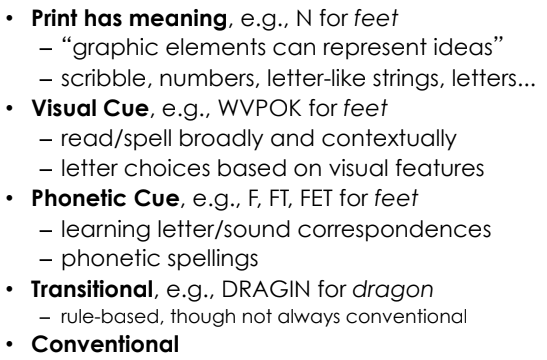
The different stages for this Development Spelling Word List (Ferroli & Shanahan 1987)
are below:
                              

Upon analysing this, I have an almost overwhelming feeling of helplessness for these students. I can't even begin to imagine how hard things must be for them in class, especially during whole class teaching, when they struggle to make connections between letters and sounds. This then moves onto putting letters (and sounds) together to form actual words.

Despite my feelings about this, this target group of students are quite up-beat about their learning. They are definitely enjoying the activities and realisation that learning can be fun! 

My next steps will be to see how the testing with Donna goes next week and go from there. Running records will also be starting soon and I'll be reporting on how that goes in a few weeks time.

Friday, 12 April 2019

Words have Power - By Jannie the Tuatara

Quantities of Quality Text

Having Jannie PD sessions can sometimes be daunting because she challenges us as teachers to think critically about our practice, about our actions, words, and at times shuts down some of the things we actually think are really really good for our students. BUT what she does in return is she prompts us to critically analyse what we say and do, why, and talks about being explicit about what we say in class with our learners.

Jannie's first task was getting us to talk about capabilities: Knowledge, vocabulary, language structure, thinking and meaning making capabilities. How is this looking in our classes? This led onto the types of texts we have in class, going back to quantities of quality text. That 'text' being not just written text but also oral spoken text. From this conversation came talk about "talk accompanied books" and what kind of mileage this gets in our classrooms. Not just reading the text with your group but also talking and having discussions along the way. This way the 'uptake' from the learner would be higher.

One part I really enjoyed of Jannie's presentation was her "SAY MORE. TELL MORE DEATIL" part.
Rather than saying "that's interesting" but instead "because you added more detail, I now know what you mean".  

Jannie also spoke a lot about "optimising learning conditions" for both teachers and the learner. To consciously provide language ready for the uptake. At the same time leaners need to focus and notice.


Thursday, 11 April 2019

Preliminary findings

As we come to the end of Term 1, I've started collecting some baseline data and evidence of the nature or extent of the student challenge. My previous post shared the tools and approaches I'd planned to use so here are my preliminary findings.

1. HFW Test - This test was conducted 1-1 and consisted of 77 words from Magenta reading level to Orange (Level 15). Students simply read each word going across the page. I tried to note down just like running records their attempts and self-corrections during the test. Here is what the test looks like.

Here are the test results of all 8 students.
A few of the students felt very frustrated as they recognised some of the words as words they've read before but on its own, they couldn't pinpoint what the actual word was. The showed me that they knew the patterns or sentence structures used in the texts they read that they were not paying attention to the actual letters forming the word, but rather "oh 'where' is normally the start of the sentence when they are looking for something". They only look as far as the first letter, then start guessing all the words they know that start with that letter.

2. Student Voice Survey - I conducted this as a group as they needed a lot of help to understand the questions as well as someone to record their answers. This also helped as they were giving each other ideas which they wouldn't be able to get on their own. Here are their responses.
I could tell by their excitement and rush to tell me more, that they felt quite important being asked what they thought of their reading lessons. I need to remember to do this more often so they can see the value of their learning and teachers actually wanting their input into how they learn in reading and writing time.

3. Weekly Reflections and Observations - This was normally jotted down onto whatever piece of paper I had lying around then put into my diary for a later date. So far I have a diary full of reflections based on just this group alone. Here is a summary of my reflections in term 1.


Thursday, 4 April 2019

Tools, Measures and Approaches


Describe the tools/measures/approaches you plan to use to get a more detailed and accurate profile of students’ learning in relation to that challenge. Justify why you chose these approaches and tools. 

Kahui Ako Achievement Challenge 5: Improve the achievement of students with special needs in the learning areas of English/ key competency using symbols, languages and texts.

My inquiry problem/ challenge: Students who are 'stuck' in their learning 2-3 years behind where they should be at for Year 7 and 8 getting ready for College.

One of the reasons why I chose this challenge, was because this particular group of students had not made much - if any - shift in their reading age for the last 2 years. A look back at their records is shared in my blog post about 'Why I've selected this challenge'

To measure how much 'new knowledge' students are learning or picking up, I plan to use the following tools and approaches:

- HFW Test (High Frequency Word Test): This test has sight words up to reading level 15 or Orange. This is a great indicator for students who recognise words they are reading daily. Very quick test to administer.

- Student Voice Survey: This would be very informative for my teaching so I'd know whether students like/enjoy the task they are given. Are instructions easy to follow? Do they feel like they get enough 'teacher time' in class. This could reinforce or change the way I teach for sure!

- Running Records: The 'ideal' aim is to improve their reading ages to enable students to cope with the academic workload required of them in College. Because PAT test don't give us behavioural/ learning difficulties related to reading, a running record every 4 or so weeks would be more informative for both students and myself.

- Weekly Reflections/observations: Completing this straight after reading sessions would be useful in moving forward with this target group of learners. - Seek help/advice/ideas from CoL across schools teachers: I have already had a meeting with Clarelle Caruthers who has helped me with iPads and how to set up my site so it's easier for this group of learners to access and navigate. I've also made an appointment with Donna Ryan for the holidays to set up a plan of attack how I can better assess and cater for this group of target students.