Write a reflection on your own professional learning through this inquiry cycle.
I have thoroughly enjoyed our PD for CoL meetings led by our Woolf Fisher researchers Hana, Aaron, and Rebecca. I have appreciated and learnt a lot from Hana and Aaron's step by step 'delving deeper' into finding what the actual challenge is for learners are. My normal reaction or next step would be "Oh I think TESSOL strategies would help them". Jumping straight to a solution rather than conducting some actual research into what has already worked for others.
I enjoyed Rebeccas random challenges when she's in attendance. "So what did you change in your teaching? How do you know that's what caused the change? where's your proof/evidence?"
Working so closely with my target group of students enabled me to get to know them better, especially their families as we conducted consistent bits of data throughout their learning journey this year.
As I head into the new year, my wonderings still remain about Mr Burts 'three-fer' and how we go about achieving that. This year, my professional kete has been filled, not just learning about my own teaching practice, but also new and interesting ideas for my team of teachers next year.
It has been a great year 2019!
Showing posts with label 2019. Show all posts
Showing posts with label 2019. Show all posts
Thursday, 12 December 2019

Thursday, 21 November 2019
Bursts and Bubbles
Today our Manaiakalani CoL teachers all shared their inquiry's for the year in 3minute bursts. Here is my 3mins sharing for bursts and bubbles session.
 Talofa Lava
Inquiry focus:
How can we better support students in reading who are ‘stuck’ in their learning (4+ years behind) and prepare them for college.
2 catalytic aspects of learning I targeted are:
Identified this as my focus when I noticed:
Strengths:
Profiling my own teaching showed I had strengths in:
Evidence is in:

Inquiry focus:
How can we better support students in reading who are ‘stuck’ in their learning (4+ years behind) and prepare them for college.
2 catalytic aspects of learning I targeted are:
- Reading Mileage
- Vocabulary Acquisition
Identified this as my focus when I noticed:
- 8 students in Y7/8 class (11, 12, 13 year olds) reading 3-4 years behind.
- Reading age of 5-7 years old
- Looked through black folders - records of all their learning @ PES
- Anecdotal notes, reports, special needs referrals
- Running records
- Student voice surveys
- Sight words/spelling tests
- Anecdotal notes on learning behaviours
Strengths:
- Interested in topic related texts
- Could work towards visual goals - coloured reading levels
- Basic as - connecting sounds with chunks of letters
- Connecting chunks together
- Needed purpose to read / motivation/ interest maintained
- Retaining what they’ve learnt
Profiling my own teaching showed I had strengths in:
- TESSOL strategies/principles
- Breaking down tasks to more manageable levels
- Consistent child support help
- Variety of engaging and do-able activities
- Interesting texts
- How I utilise micro-teaching time in class. Rather than focus on getting through a text we did a deep dive. This is unpacking words/phrases extending students vocab by looking at it in and out of context & making connections to related word families.
- Creating more fluid discussions amongst group. Rather than T-S-T-S. We encouraged a fluid S-S-S-S
- More organisational one: Different text every day - follow up sight words and online stories to listen to.
- Combination of Jannie Van Hees’ “Generating dialogic conversations” and deep dive/higher expectations
- Betsy Sewell’s agility with sound workshops.
Evidence is in:
- Student voice surveys
- Shifts in reading levels made this year alone (2-8 levels) compared to their last 3 years of schooling from 2016 (2-4 levels combined)
Friday, 15 November 2019
Digital Fluency Intensive #9 - Exam day
Hallelujah! I am definitely thrilled to have passed the Level 1 of the Google Certified Educator exam. It put into practice a lot of what we had covered in DFI.

 This means, due to digital affordances, our learners have the potential to be experiencing high quality learning experiences right now while we are here at DFI. This is especially important and crucial for the learning of our students who generally are exposed to 30,000,000 less words than students living in higher decile areas.


Our last session of DFI covered the term 'Ubiquitous' - Anytime, Anywhere, Any pace.
 This means, due to digital affordances, our learners have the potential to be experiencing high quality learning experiences right now while we are here at DFI. This is especially important and crucial for the learning of our students who generally are exposed to 30,000,000 less words than students living in higher decile areas.
The following image shows the effects the Summer Learning Journey can have on students who take part in the holidays. As teachers, if we make it an everyday practice to make all learning rewindable, and check on our learning online during the break, then we are ensuring that all of our students have the tools they need to be successful. I found this rewindable accessibility especially helpful during the Level 1 exam.

I feel very grateful to have experienced and tried out the various skills and tools covered in the 9week DFI course. More exciting than passing the exam, are the rich rewindable resources/tools now available to us! Knowing where to find it and being able to help others with new things I've learnt brings more meaning to our Learn, Create, Share journey.
Thank you to Gerhard and Dorothy for the fun filled whirlwind adventures and life hacks online. I've definitely enjoyed my time.
DFI Cohort #3 - 2019 signing out!
Friday, 8 November 2019
Digital Fluency Intensive #8
Session 8 already! Today's session was all about Devices: 1-1 devices using chromebooks or ipads.
Today's pedagogy was about Cybersmart and more specifically using the right language when talking with our students. Here are the cybersmart lessons available on the Manaiakalani site. Check out my screencastify further down this blog post for a tour through one of the options 'Smart Learner'.
 Smart learners - can be as simple as: just like you set your books up with date and ruling pages, set up your docs and google drive so students know the expectations and know the right folders to put their work in.
This smart learner lesson also carried into our session on Hapara - Teacher Dashboard. It was great to see the push for keeping it positive by always displaying dashboard not as a means to threaten kids or x them out of their tabs but rather as a 'norm' and focussing on more positive things like "Great to see ___ moving onto the next task..." We also covered many of the useful options available to us on dashboard. One new thing I found out was that I could see student's blogs which haven't been published yet and also anonymous comments that are highlighted in red. I need to make sure I check this more regularly as I never knew this.
I really enjoyed being in our students shoes and having a go at working off a chromebook and ipad. It definitely makes me realise just how talented students are who are able to draw detailed images on google draw as the touch pad is not as big and easy to manoeuvre as it is on a mac.
Our create challenge was to create a screencastify about one aspect of the cybersmart areas and talk through the lesson plans provided. Check out 'Smart Learner'.
We also registered for the Level 1 Google Exam for next. Looking forward to it.
Today's pedagogy was about Cybersmart and more specifically using the right language when talking with our students. Here are the cybersmart lessons available on the Manaiakalani site. Check out my screencastify further down this blog post for a tour through one of the options 'Smart Learner'.

This smart learner lesson also carried into our session on Hapara - Teacher Dashboard. It was great to see the push for keeping it positive by always displaying dashboard not as a means to threaten kids or x them out of their tabs but rather as a 'norm' and focussing on more positive things like "Great to see ___ moving onto the next task..." We also covered many of the useful options available to us on dashboard. One new thing I found out was that I could see student's blogs which haven't been published yet and also anonymous comments that are highlighted in red. I need to make sure I check this more regularly as I never knew this.
I really enjoyed being in our students shoes and having a go at working off a chromebook and ipad. It definitely makes me realise just how talented students are who are able to draw detailed images on google draw as the touch pad is not as big and easy to manoeuvre as it is on a mac.
Our create challenge was to create a screencastify about one aspect of the cybersmart areas and talk through the lesson plans provided. Check out 'Smart Learner'.
We also registered for the Level 1 Google Exam for next. Looking forward to it.
Friday, 1 November 2019
Digital Fluency Intensive #7
Our sessions with Dorothy looking into the Manaiakalani pedagogy and kaupapa have always been really good reminders for me personally. Even though I'd already heard most of it before, it is great to hear and be reminded of where this pedagogy came from, its back story or history. Today was all about empowerment. Great reminder that being in a Manaiakalani school and 1-1 chromebooks is NOT just a tool. But rather something that empowers learners, who then empower our whanau and wider community.
Today's session was all about computational thinking. This is thinking like a computer would, coding directions/instructions and also debugging or problem solving. Our kids have had great experiences with this part of the curriculum in Term 2 when we covered coding using scratch and students were able to use their animations to show their way around the world. Here is an example from Tha Zin's blog.


We all had a go at trying out some basic coding on scratch and Vivian from OMG Tech took us through a simple coding experience that can be used to introduce computational thinking to beginners. This involved 6 players, each with a number (we used the distance from where we were born to where we are now). Rules/code was, whoever has the biggest number goes right (or straight if up against a wall) and the other person goes left. We carried this on and ended up with 6 players in numerical order at the end.
This was a great hands on session so even though it is not something I would personally take interest in (but I learn it for the sake of teaching my students and it being part of the curriculum). Here's another hands on activity we did about the called the zombie lights we used to distract the zombies so we could get away.


The image on the left is what we received in the pack and the image on the right is our completed zombie light.
I really enjoyed learning about the binary number system which is how you represent data using electricity (how computers are programmed) using 1 and 0.
Friday, 25 October 2019
Digital Fluency Intensive #6
Our focus for our 6th DFI session was all about dealing with data. This was definitely the perfect timing to have this session as we near the end of year with all our data analysis for end of year testing. This will also help me to collate data and how best to show progress/achievement from my own inquiry as part of our CoL role.
My 2 interesting things I learnt was the use of Google My Maps and Pick a path option in Google Forms. My maps was great to see the potential it has when teaching maths or showing a classroom profile in terms of where students are from using the world map. Forms would definitely be an option to use in class more often - especially with the current quiz form I am currently composing - as students are really interested in being tested on current events.
Google Sheets - this great tool just got better as I learnt more things I can do on it. I use sheets daily for planning, student turn-in sheets, and for team data collection. Something new I've learnt how to do today and will be sharing with my team is analysing our students blog post numbers. Here is a graph I've created using sheets about Zaeeda's blog posts over the years. From here I could have some really good learning conversations with her about her blogging over the years and ask maybe why she has only blogged in Jan this year and last. It could be that she didn't take her chromebook home over the holidays? I will definitely be revisiting Robyn Anderson from Panmure Bridge's blog post to follow through on her statistics unit as part of our maths programme in Term 1. Thank you Robyn!
Monday, 23 September 2019
End of Term 3 Update
As Term 3 comes to an end, I feel like I have lost a bit of my focus and traction with my target group and the goals we had set at the start of the term. I will be using the holiday break to review where I am in my inquiry and how best to go forward into such a busy Term 4 and still make the most of it for my group of learners.
What I can report on are the testing behaviours and results for their running records for the end of this term. Here are the levels or reading ages from the end of 2018 to now.


I have shown these shifts to each individual in my target group and I don't think they truely understood the enormity of their success until I showed their progress from the last 3 years where they hardly made any shift at all. Once this sunk in, they were absolutely excited and ready to take another test now! We talked about what this means for them, what they can now do and couldn't do before, and we also covered what they need to work on individually in order to keep doing better in the next test. My next task is to set them up to take PAT tests to the best of their ability.
One of my hypotheses I was keeping track of throughout the year is being test ready. I covered this briefly in my End of Term 2 update. My actual notes during testing look like this on the right -->
But a more cohesive version of notes for their behaviours and actions during testing are below. Although I had 1student missing from this testing, I do hope to catch him before the end of the term of early in week 1 next term.

Additional information: I've shared this post with my school-wide inquiry group as well as my Team 5 group of teachers. They have helped me by adding notes and comments to students behaviours outside my class and what they are like with them. Here I am reminded that some students have other needs. An example is student AT, who actually needs to ensure he is taking his meds for ADHD as his behaviour shows he is not. His home class teacher has also given extra information that may help me better cater for him next term.
What I can report on are the testing behaviours and results for their running records for the end of this term. Here are the levels or reading ages from the end of 2018 to now.


I have shown these shifts to each individual in my target group and I don't think they truely understood the enormity of their success until I showed their progress from the last 3 years where they hardly made any shift at all. Once this sunk in, they were absolutely excited and ready to take another test now! We talked about what this means for them, what they can now do and couldn't do before, and we also covered what they need to work on individually in order to keep doing better in the next test. My next task is to set them up to take PAT tests to the best of their ability.
One of my hypotheses I was keeping track of throughout the year is being test ready. I covered this briefly in my End of Term 2 update. My actual notes during testing look like this on the right -->
But a more cohesive version of notes for their behaviours and actions during testing are below. Although I had 1student missing from this testing, I do hope to catch him before the end of the term of early in week 1 next term.

Additional information: I've shared this post with my school-wide inquiry group as well as my Team 5 group of teachers. They have helped me by adding notes and comments to students behaviours outside my class and what they are like with them. Here I am reminded that some students have other needs. An example is student AT, who actually needs to ensure he is taking his meds for ADHD as his behaviour shows he is not. His home class teacher has also given extra information that may help me better cater for him next term.
Friday, 20 September 2019
Digital Fluency Intensive #4
Todays focus was collaborating around google sites. What a task they set for us today. It was definitely great to be able to start a site from scratch over and over again so we go used to where things were and how to line things up so it looked neat and tidy.
Here is a link to my multimodal site - Idenity.
 A lot of the information or linking of texts was taken from Angela Moala's multimodal spreadsheet which is a collection of texts which make up a multi textual series of learning. The only things I had to create were the learning tasks that linked up the different texts.
Dorothy also went through some of Woolf Fishers research about T shaped literacy which our team of teachers in Year 7 & 8 have been looking at over the last couple of years. This is taking students through a literacy lesson that is both deep and wide. This is ensuring you as a teacher are diving deeply into a main text with your group of students, but also providing opportunities for them to work independently on activities with a variety of other texts/videos. This was the purpose of us creating a multimodal site.
One take away I will definitely remember to keep in mind for the rest of my planning, is to ensure I provide opportunities to empower students through free choice of texts to read. This is also added on at the end of my site.
I would love to keep creating multimodal sites like this for my teams inquiry studies or even during units of learning in literacy.
Thank you DFI for another workshop filled with useful knowledge and tools to use daily.
Here is a link to my multimodal site - Idenity.
Dorothy also went through some of Woolf Fishers research about T shaped literacy which our team of teachers in Year 7 & 8 have been looking at over the last couple of years. This is taking students through a literacy lesson that is both deep and wide. This is ensuring you as a teacher are diving deeply into a main text with your group of students, but also providing opportunities for them to work independently on activities with a variety of other texts/videos. This was the purpose of us creating a multimodal site.
One take away I will definitely remember to keep in mind for the rest of my planning, is to ensure I provide opportunities to empower students through free choice of texts to read. This is also added on at the end of my site.
I would love to keep creating multimodal sites like this for my teams inquiry studies or even during units of learning in literacy.
Thank you DFI for another workshop filled with useful knowledge and tools to use daily.
Wednesday, 18 September 2019
Digital Fluency Intensive #3
Our 3rd DFI day I missed out on due to being on leave. Upon reading up on the agenda for the day, I was quite guttered that I'd missed out on it as my students and I quite enjoy creating on google slides and drawings.


Here is my attempt at one of the tasks on google drawings. I've also added this as a button on the left hand side of my blog.

What I really enjoyed and find useful is the Google drawings sandpit with links to examples of it's many uses which gave me new and fresh ideas I hadn't used before.

One thing I do need to go back and double check are the settings on youtube and organising my playlist to suit my class and their use of youtube.
Friday, 6 September 2019
Digital Fluency Intensive #2
Day 2 of our DFI course brought more learning about our Manaiakalani Kaupapa as well as exposing us to areas of the GSuite we have yet to use.
One of my takeaways from the AKO section of the Manaiakalani kaupapa and pedagogy was RATE. Recognise, Amplify, Turbocharge, Effective Teaching. This led me to a very useful blog post from one of my team members which triggered all the learning that took place in one of our Learn staff meetings at the start of the year. Here is a link to Kiriwai's blog post.
 One of my biggest takeaways was from our deep diving session about Google KEEP.
Normally during a DFI session, I would make quick notes on my phone using Samsung notes so I could remember the things I needed to go back and have a look at and the most useful things for me and my class to start using. With google keep, I can use this on anything google on my laptop as well as on my phone and it would update immediately. Here's a list of all the things google keep can do which include: can take photos, shopping list, can draw, can get notes or comments shared across team and plug then in along docs and so much more. The best and most useful part of google keep which I will definitely be using in my class is the fact that it can grab text from an image! I could take a photo of a piece of text from a book and using google keep, extract the text from the photo and have students use this in docs for students to highlight and write notes/comments next to it.
Something that I could use with my team this coming holidays would be our session on google hangouts. This enabled us to talk to each other in a group setting and screen sharing. We combined this with quicktime player to record our google hangout. We trialled this in small groups of 3 so here is a short video of myself sharing with Jenny and Elena.
One of my takeaways from the AKO section of the Manaiakalani kaupapa and pedagogy was RATE. Recognise, Amplify, Turbocharge, Effective Teaching. This led me to a very useful blog post from one of my team members which triggered all the learning that took place in one of our Learn staff meetings at the start of the year. Here is a link to Kiriwai's blog post.
Normally during a DFI session, I would make quick notes on my phone using Samsung notes so I could remember the things I needed to go back and have a look at and the most useful things for me and my class to start using. With google keep, I can use this on anything google on my laptop as well as on my phone and it would update immediately. Here's a list of all the things google keep can do which include: can take photos, shopping list, can draw, can get notes or comments shared across team and plug then in along docs and so much more. The best and most useful part of google keep which I will definitely be using in my class is the fact that it can grab text from an image! I could take a photo of a piece of text from a book and using google keep, extract the text from the photo and have students use this in docs for students to highlight and write notes/comments next to it.
Something that I could use with my team this coming holidays would be our session on google hangouts. This enabled us to talk to each other in a group setting and screen sharing. We combined this with quicktime player to record our google hangout. We trialled this in small groups of 3 so here is a short video of myself sharing with Jenny and Elena.
Friday, 30 August 2019
Digital Fluency Intensive #1
I have been looking forward to my chance to join the DFI course and finally I've made it in cohort #3. An exciting start jam packed with an enormous amount of knowledge, tricks and quick fixes which would all add towards making my teaching life a lot more manageable in our Google world.
We are very fortunate to have quite a packed class in this cohort as it makes for more rich sharing of experiences from novices and experts alike.
Having been at Pt England and therefore part of Manaiakalani for the last 5 years, I was immediately immersed in the Learn, Create, Share pedagogy which has become just what we do as teachers. Something new and interesting I found out today during Dorothy's coverage of the 'Origins of Manaiakalani' was that this was born out of classroom teachers literacy learning cycles and the realisation that we were actually already doing Learning, Creating and Sharing just in smaller settings and maybe using different academic language.
One of the things I really enjoy about DFI so far is the set out/ layout in which the course is delivered I've shared this in my top tips poster below (which is a big achievement in itself as it is made in google docs!). This is using the Deep Diving, Chalk 'n Talk, Explore and Levelling Up model. It definitely felt like all those things and I particularly enjoyed the levelling up so that if we felt up to the challenge, there is still more to be learnt, or we could choose to stay and keep familiarising ourselves with some of the things we've covered already.
My biggest takeaway is the amazing wonders of google docs. One thing I could share with my students come Monday would be the explore button on docs which only give you images that are free and good to use with citations already imbedded.
One thing I will be working on is to do a complete Marie Kondo of my drive so my folders for the last 5 years are more organised.
There is so much more I have picked up and can't wait to revisit. This is also made easy as everything is rewindable and constantly being updated for us. So I've had such an enjoyable 1st session and am looking forward to our next DFI session. I also highly recommend EVERYONE needs to make sure they do this course.

We are very fortunate to have quite a packed class in this cohort as it makes for more rich sharing of experiences from novices and experts alike.
Having been at Pt England and therefore part of Manaiakalani for the last 5 years, I was immediately immersed in the Learn, Create, Share pedagogy which has become just what we do as teachers. Something new and interesting I found out today during Dorothy's coverage of the 'Origins of Manaiakalani' was that this was born out of classroom teachers literacy learning cycles and the realisation that we were actually already doing Learning, Creating and Sharing just in smaller settings and maybe using different academic language.
One of the things I really enjoy about DFI so far is the set out/ layout in which the course is delivered I've shared this in my top tips poster below (which is a big achievement in itself as it is made in google docs!). This is using the Deep Diving, Chalk 'n Talk, Explore and Levelling Up model. It definitely felt like all those things and I particularly enjoyed the levelling up so that if we felt up to the challenge, there is still more to be learnt, or we could choose to stay and keep familiarising ourselves with some of the things we've covered already.
My biggest takeaway is the amazing wonders of google docs. One thing I could share with my students come Monday would be the explore button on docs which only give you images that are free and good to use with citations already imbedded.
One thing I will be working on is to do a complete Marie Kondo of my drive so my folders for the last 5 years are more organised.
There is so much more I have picked up and can't wait to revisit. This is also made easy as everything is rewindable and constantly being updated for us. So I've had such an enjoyable 1st session and am looking forward to our next DFI session. I also highly recommend EVERYONE needs to make sure they do this course.

Thursday, 1 August 2019
Target group - Sharing their learning
 One of our group goals this term is to share our learning on our blogs. We've made a good start of it so far with my target group. Here are examples of their learning from their blog.
Our next steps is to work on a task description which explains what they learnt about in their reading group. I have 1 or 2 students who can do this independently. but the rest will need to have a guided mini writing session to get this written and onto their blogs.


Thursday, 25 July 2019
Hypothesis 2 & 4 - Interventions in action
Term 3 started by revealing new reading groups and explaining why the changes were made and the challenge was made for others to monitor their own reading so they could see their progress - especially my target students who were still tracking along the colour wheel.


As a result from running records last term, one of my target students has moved out of the target group into the next reading group up. I haven't quite figured out how I will ensure the same interventions used with the group will be used in her new group but I will endeavour to sort that out next week.
Here is my collated data for Hypothesis #2: Student voice. This also includes our goal setting talk which links with Hypothesis #4: High expectations.

One of my highlights from this one-on-one session was students were able to say what they were good at and what they needed help with. I could also see that students struggled with spelling and they saw this as a barrier in their writing.
They also completed a quick sight word test.

My goal for this term is to make the students learning visible. Only 3 or 4 students have shown they are able to select the best part of their learning/task to share onto their blog. My aim is to up-skill everyone in the group with the skills to share from 'explain everything' and then write a short description about their learning to accompany this.
Tuesday, 2 July 2019
End of Term 2 update
Here are the results of our mid-year running records testing. As mentioned in my Hypothesis 3: Being test ready, I've noted behaviours and test outcomes for my target group without much scaffolding into what to expect when they are being tested.

Observations:
Before Testing: The majority of students were quite apprehensive about being tested. They didn't think they were ready for it and kept asking questions about what to expect before I'd had a chance to explain how testing works. Once my explanation was given 2 of the boys did make comments like "oh Miss I'm dumb I won't get anything right" and "Oh man. Can we just talk about it?" meaning he just wanted to discuss the book like we normally do in guided reading sessions. The rest of the group were ok to go along with it and give it their best shot.
During Testing: Most students who moved up more than 1 level struggled reading their 1st test and I was a bit 'iffy' about whether I should keep testing or not. But because they scored more than 98% accuracy in decoding and 100% in comprehension, I went ahead and tested them up. What I noticed was that they got better (more fluent) in their reading. My hunch is that this was confidence/momentum gained from the 1st test that the next one they were more relaxed with and just read normally without being nervous about the 'testing atmosphere'.
After Testing: Once I showed each student how far they'd moved on the colour wheel or stages on the back of the books, they were quite excited and almost in disbelief that they made it that far. One student commented "Not even Miss. Those colours are wrong I'm still reading at red level". He said it as a joke, but I could tell he was so used to reading at such a low level he lacked self-belief that he could get that far up on the colour wheel. I definitely made sure to encourage him with lots of praise and hi-5's and to keep it up as we'd like to keep moving up next term.
Testing Results:

- 3 students moved up 3 levels and could still be tested higher. But due to time restraints, I had to stop after 3 tests.
- 1 student moved up 2 levels (moving up 1 level shocked him!) He didn't want to keep going for fear of failing when he was doing so well.
- 2 students failed their test so I was able to get a concrete level for where they are reading at now.
- 1 student (RF) I tested using Probe. She read so well and confidently that I have a feeling I may have held her back too long and she was ready to move sometime during the term. But now that I know, she will be moving up a reading group. I will still continue to monitor her progress as part of this target group.
Additional Information:
I've added this groups attendance records just as a side note about these students. After 6-7 years of schooling, and still reading below 7.5 years of age, one of the contributing factors was their attendance. A few of these students also need support staff hours and other interventions but due to their frequent absences, they do not qualify for funding to get them this help. I went into to this challenge knowing this, and am committed to doing my best for them and with them on whatever day they do turn up. A great example would be student AT who with only 35% attendance for the 1st half of the year still managed to move up 2 levels. I encouraged him to wonder about what he could achieve if he actually attended school more regularly. Overall, I, along with my group and support staff worker were very happy with our mid-year results. This has definitely helped me shape my 4th Hypothesis about high expectations. Stay tuned!
Thursday, 30 May 2019
Testing out hypotheses
For each of your hypotheses, explain how you will test it and what evidence would support (or refute) that hypothesis.
Here is a plan for how I will test out each hypothesis giving a before and after 'snapshot'.
Hypothesis 1: Vocab and Comprehension:
My evidence to best show this would be a combination of my teacher planning in the DATs section (Deliberate Acts of Teaching) and the reflection notes describing how the group discussions went around vocab. Also students follow-up tasks on their blog. If students are able to explain that their learning was about the vocab found in texts rather than what the story was about.
Hypothesis 2: Student Voice
Evidence for this would be collecting student voice surveys from each Term as the year goes on. I'll also be looking at my reflection notes to see who/how many students I get to see 1-1 each week.
Hypothesis 3: Being Test Ready (Scaffolding)
I've put scaffolding in brackets as I feel it is the taking away of the materials students are using in their learning which will give an indication as to how well they can cope with learning without all the gadgets. As I haven't done much prep work this time round for running records testing, I can compare behaviours during testing - without any preparation around what to expect when you get tested - to later on in the year and format lessons so students know what to expect.
Hypothesis 4: High Expectations
The best way to try this out would be from our goal setting at the start of each term. From the goals we set at the start of the term, I will test to see who has made shifts and who hasn't. From there I'll evaluate and reflect on whether the expectations were too high, and if so, what's a smaller step we can aim for that's not reading age related but maybe more towards vocabulary.
Here is a plan for how I will test out each hypothesis giving a before and after 'snapshot'.
Hypothesis 1: Vocab and Comprehension:
My evidence to best show this would be a combination of my teacher planning in the DATs section (Deliberate Acts of Teaching) and the reflection notes describing how the group discussions went around vocab. Also students follow-up tasks on their blog. If students are able to explain that their learning was about the vocab found in texts rather than what the story was about.
Hypothesis 2: Student Voice
Evidence for this would be collecting student voice surveys from each Term as the year goes on. I'll also be looking at my reflection notes to see who/how many students I get to see 1-1 each week.
Hypothesis 3: Being Test Ready (Scaffolding)
I've put scaffolding in brackets as I feel it is the taking away of the materials students are using in their learning which will give an indication as to how well they can cope with learning without all the gadgets. As I haven't done much prep work this time round for running records testing, I can compare behaviours during testing - without any preparation around what to expect when you get tested - to later on in the year and format lessons so students know what to expect.
Hypothesis 4: High Expectations
The best way to try this out would be from our goal setting at the start of each term. From the goals we set at the start of the term, I will test to see who has made shifts and who hasn't. From there I'll evaluate and reflect on whether the expectations were too high, and if so, what's a smaller step we can aim for that's not reading age related but maybe more towards vocabulary.
Thursday, 23 May 2019
Most Test Worthy Hypotheses
Explain the hypotheses about teaching that you decided were MOST worth testing, and why.
'' For students truly to be able to take responsibility for their learning, both teacher and students need to be very clear about what is being learnt, and how they should go about it. When learning and the path towards it are clear, research shows that there are a number of important shifts for students. Their motivation improves, they stay on-task, their behaviour improves and they are able to take more responsibility for their learning. ''
'' For students truly to be able to take responsibility for their learning, both teacher and students need to be very clear about what is being learnt, and how they should go about it. When learning and the path towards it are clear, research shows that there are a number of important shifts for students. Their motivation improves, they stay on-task, their behaviour improves and they are able to take more responsibility for their learning. ''
Absolum, M. (2006). 'Clarity in the Classroom'.
“Effective teachers inquire into the relationship between what they do and what happens for students (outcomes). But effective teachers do more than simply inquire (or reflect) – they take action to improve the outcomes for students and continue to inquire into the value of these interventions.”
(Aitken, 2010)
In delving deeper into this inquiry, I've realised there are so many factors and points I would like to cover in order to get my students into the right head space where they can take responsibility for their own learning, and my role in helping them get to that place. Here are a list of hypotheses I have decided (based on learning conversations around the school) are MOST test worthy and beneficial for my learners at the present time.
Hypothesis 1: Vocab vs Comprehension
Should I be focusing more on vocab rather than comprehension? Based on observation and testing so far, generating general conversation about a text has been difficult at times because the reading hasn't been fluent enough. Decoding is a bit of a stutter so the understanding of words hasn't been too clear. I believe although they are Year 7/8 students, a focus on vocabulary and letter sounds would more beneficial not just for their reading but also for writing. This hypotheses has come about through my observations with Helen Squires, specialised spelling test from Donna Ryan.
Hypothesis 2: Student voice
Am I checking in enough 1-1 with students? Am I listening to what they have to say about their learning? What I have found so far in my random 1-1 sessions is they become more switched on after their talks with me. They pay more attention and I guess they start to feel like they've been listened to. Doing more of this during a term would benefit students in my target group especially because they already have poor attendance and some have been identified as having behavioural issues.
Hypothesis 3: Being 'Test' Ready (Scaffolding)
Am I setting students up to be 'test ready' in Year 7/8 standardised testing situations? With iPads and using voice typing, and all the specialised scaffolding students are needing in order understand what they are learning about. None of these are on hand to use during normal standardised testing. Am I setting them up to be test ready?
Hypothesis 4: High Expectations
Are my expectations of my target group high enough? Or is it too high? Keeping in mind that these students have been at school for 6-7 years already and are still reading at 5.9years - 7.5 years reading age. Is a jump from 6years to 6.5years in a term too high of an expectation?
Thursday, 16 May 2019
What I read & who I talked to...
The latest task in our inquiry process is to develop a set of hypotheses about patterns in my teaching that could be changed or more effectively address the student learning focus.
The first part of this is:
Describe your process for developing hypotheses (what you read, who you talked with).
Learning Conversations with Colleagues
One of the starting points for this process would definitely be the sharing time in our team meetings where we share our success stories and things that have been going well in class. We also share our struggles and areas in reading which we need help with. Being in a team with a wealth of knowledge is great as everyone has gems and pointers to try out in class to help cater to some of the struggles with our learners.
Conversations with CoL Across Schools Teachers
I've had really informative discussions with 2 across schools teachers each time I've booked in with them. Clarelle Caruthers has helped with iPad activities using Explain Everything. Donna Ryan has also been helpful with her knowledge of assessments for students who barely register a mark on standardised tests for Year 7/8 students.
1-1 conversations with students in target group
Some of my release time on Thursdays have been used to have discussions with the learners in my target or focus group. The aim of these discussions is just to check in with them in regards to their whole well-being. Are they getting enough sleep, is there something we can do to help them get to school on time and everyday, do they need lunch, what are they struggling with in class (can be other classes) and share some of their success with things they've shared on their blog.
Teacher Observations: Agility with Sounds with Helen Squires
I was fortunate to be able to observe Helen take a group through Betsy Sewell's program 'Agility with Sounds'. Definitely made me see some of the gaps my learners have being catered to through this program. Here are some notes taken from that session. Thank you Hannah West for taking notes.
Professional Reading: Here are a few readings I've looked into in my 'delving deeper' phase of this inquiry. I have chosen these mainly from recommendations from others and colleagues directing me to where I could find more information about how to cater to my learners needs better. Also I wanted to find out about my own practice - am I being explicit enough, or pitching and planning work at the right level for my learners?
1. What every primary school teacher should know about vocabulary - Jannie van Hees and Paul Nation
2. Teaching ESL/EFL Reading and Writing - I. S. P. Nation
3. Clarity in the classroom - Michael Absolum
4. ESOL online - https://esolonline.tki.org.nz/
Tuesday, 14 May 2019
Manaiakalani 'Create' PD
Yesterday our cluster got to experience some create activities as part of our PD. There were many different create workshops from rocket making, to sign language and even line dancing!
I was needing fuel for a Monday so I chose the cooking workshop which was making Vietnamese spring rolls.
This workshop was taken by Akesa Tuipulotu who took us through the steps of making the Vietnamese spring roll, the ingredients and where things can be found on our benches. In the end we filled ourselves up with some prawn filled spring rolls and sizzling mince ones. A thoroughly satisfying workshop.

I was needing fuel for a Monday so I chose the cooking workshop which was making Vietnamese spring rolls.
This workshop was taken by Akesa Tuipulotu who took us through the steps of making the Vietnamese spring roll, the ingredients and where things can be found on our benches. In the end we filled ourselves up with some prawn filled spring rolls and sizzling mince ones. A thoroughly satisfying workshop.

Thursday, 2 May 2019
Preliminary findings - Part 2
This term I have continued my quest for collecting data and evidence (Preliminary findings - part 1) to show in clearer detail the nature or extent of the student challenge.

One of the things I'd mentioned in the Tools, Measures and Approaches blog post was that I would seek help from CoL across schools teachers for more ideas on how I can get a clearer picture for what my target group CAN do.
So in the holidays I booked a time with Donna Ryan from Sommerville Special School. I shared with her my struggles with pinpointing exactly what my students were struggling with in reading. One of the things she gave me was a spelling test which, when analysed, could give you a better idea if it is letter-sound problems, phonics or something else they are struggling with. Donna has also offered to come into my class in Week 2 this term to test these students and see if she can pick up any other learning behaviours I haven't been able to identify.
The following are the spelling test for 7 out of 8 students. 1 of my students in this target group has been absent all week so far. This is a common pattern for him but I am still keen to keep him on as a target student.

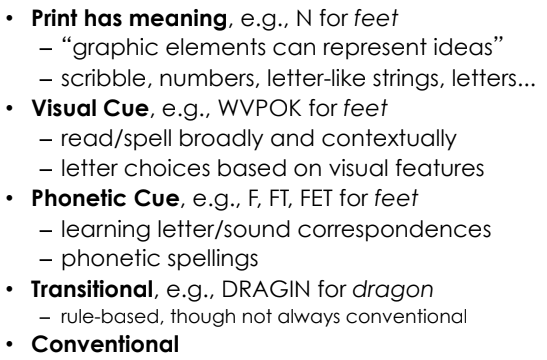
The different stages for this Development Spelling Word List (Ferroli & Shanahan 1987)
are below:
Upon analysing this, I have an almost overwhelming feeling of helplessness for these students. I can't even begin to imagine how hard things must be for them in class, especially during whole class teaching, when they struggle to make connections between letters and sounds. This then moves onto putting letters (and sounds) together to form actual words.
Despite my feelings about this, this target group of students are quite up-beat about their learning. They are definitely enjoying the activities and realisation that learning can be fun!
My next steps will be to see how the testing with Donna goes next week and go from there. Running records will also be starting soon and I'll be reporting on how that goes in a few weeks time.
Friday, 12 April 2019
Words have Power - By Jannie the Tuatara
Quantities of Quality Text
Having Jannie PD sessions can sometimes be daunting because she challenges us as teachers to think critically about our practice, about our actions, words, and at times shuts down some of the things we actually think are really really good for our students. BUT what she does in return is she prompts us to critically analyse what we say and do, why, and talks about being explicit about what we say in class with our learners.
Jannie's first task was getting us to talk about capabilities: Knowledge, vocabulary, language structure, thinking and meaning making capabilities. How is this looking in our classes? This led onto the types of texts we have in class, going back to quantities of quality text. That 'text' being not just written text but also oral spoken text. From this conversation came talk about "talk accompanied books" and what kind of mileage this gets in our classrooms. Not just reading the text with your group but also talking and having discussions along the way. This way the 'uptake' from the learner would be higher.
One part I really enjoyed of Jannie's presentation was her "SAY MORE. TELL MORE DEATIL" part.

Rather than saying "that's interesting" but instead "because you added more detail, I now know what you mean".
Jannie also spoke a lot about "optimising learning conditions" for both teachers and the learner. To consciously provide language ready for the uptake. At the same time leaners need to focus and notice.

Subscribe to:
Posts (Atom)