Write a reflection on your own professional learning through this inquiry cycle.
I have thoroughly enjoyed our PD for CoL meetings led by our Woolf Fisher researchers Hana, Aaron, and Rebecca. I have appreciated and learnt a lot from Hana and Aaron's step by step 'delving deeper' into finding what the actual challenge is for learners are. My normal reaction or next step would be "Oh I think TESSOL strategies would help them". Jumping straight to a solution rather than conducting some actual research into what has already worked for others.
I enjoyed Rebeccas random challenges when she's in attendance. "So what did you change in your teaching? How do you know that's what caused the change? where's your proof/evidence?"
Working so closely with my target group of students enabled me to get to know them better, especially their families as we conducted consistent bits of data throughout their learning journey this year.
As I head into the new year, my wonderings still remain about Mr Burts 'three-fer' and how we go about achieving that. This year, my professional kete has been filled, not just learning about my own teaching practice, but also new and interesting ideas for my team of teachers next year.
It has been a great year 2019!
Showing posts with label CoL 2019. Show all posts
Showing posts with label CoL 2019. Show all posts
Thursday, 12 December 2019

Thursday, 5 December 2019
Summarise evidence of key shifts
2. Summarise evidence about key shifts in the problem of student learning.
My 2 catalytic areas of focus for this inquiry was targeting reading mileage and vocabulary acquisition. I found this really difficult to get started due to my target students poor self-esteem and attitude when it came to reading. This showed up in one of my first student voice surveys which I shared in my blog post about preliminary findings.

The above are the shifts in reading levels and reading ages made this year alone. The table below shows their shifts over the past 3 years. This is to show the comparison to what had been their 'norm' in terms of shifts in reading, compared to the shifts they made this year alone.

As you can see, student FM made no shift in reading levels for 2 years and only made 1 shift last year. This year he has shifted up 4 levels in his reading! That is an incredible feat and achievement for him,
Student AV only arrived in NZ in 2018 and made no shifts that year. This year she made a whopping 8 level shift! I have a feeling she may have been put at the wrong level to start with due to the miscommunication and language barrier at the start of her journey in NZ.
Student LL made a combined shift of 5 levels over the last 3 years. She has made the same shift this one year alone.
Student SK has had a history of missing out on testing that she's only been on record as moving 2 reading levels over the past 3 years. She is very thrilled to have moved up 6 levels this year.
Student PT is new to NZ and Pt England so does not have any past data to compare with.
Student AT has missed almost half the year of schooling and is yet to return in Term 4. He has done well to make 4 levels shift in reading compared to 4 level shift over the last 3 years combined,
Student GW looks like he actually peaked last year with his reading shifts. That might explain why it was very hard to make shift this year. He only managed to shift in the second half of the year.
Student RF has maintained a high shift in reading levels last year and this year. This is great compared to no shifts made in 2017.
Another area of learning that showed shift, was the student voice data that was collect at certain intervals throughout the year. Here is the link to the slides.
Thursday, 21 November 2019
Bursts and Bubbles
Today our Manaiakalani CoL teachers all shared their inquiry's for the year in 3minute bursts. Here is my 3mins sharing for bursts and bubbles session.
 Talofa Lava
Inquiry focus:
How can we better support students in reading who are ‘stuck’ in their learning (4+ years behind) and prepare them for college.
2 catalytic aspects of learning I targeted are:
Identified this as my focus when I noticed:
Strengths:
Profiling my own teaching showed I had strengths in:
Evidence is in:

Inquiry focus:
How can we better support students in reading who are ‘stuck’ in their learning (4+ years behind) and prepare them for college.
2 catalytic aspects of learning I targeted are:
- Reading Mileage
- Vocabulary Acquisition
Identified this as my focus when I noticed:
- 8 students in Y7/8 class (11, 12, 13 year olds) reading 3-4 years behind.
- Reading age of 5-7 years old
- Looked through black folders - records of all their learning @ PES
- Anecdotal notes, reports, special needs referrals
- Running records
- Student voice surveys
- Sight words/spelling tests
- Anecdotal notes on learning behaviours
Strengths:
- Interested in topic related texts
- Could work towards visual goals - coloured reading levels
- Basic as - connecting sounds with chunks of letters
- Connecting chunks together
- Needed purpose to read / motivation/ interest maintained
- Retaining what they’ve learnt
Profiling my own teaching showed I had strengths in:
- TESSOL strategies/principles
- Breaking down tasks to more manageable levels
- Consistent child support help
- Variety of engaging and do-able activities
- Interesting texts
- How I utilise micro-teaching time in class. Rather than focus on getting through a text we did a deep dive. This is unpacking words/phrases extending students vocab by looking at it in and out of context & making connections to related word families.
- Creating more fluid discussions amongst group. Rather than T-S-T-S. We encouraged a fluid S-S-S-S
- More organisational one: Different text every day - follow up sight words and online stories to listen to.
- Combination of Jannie Van Hees’ “Generating dialogic conversations” and deep dive/higher expectations
- Betsy Sewell’s agility with sound workshops.
Evidence is in:
- Student voice surveys
- Shifts in reading levels made this year alone (2-8 levels) compared to their last 3 years of schooling from 2016 (2-4 levels combined)
Thursday, 7 November 2019
Key changes I've made in my Inquiry
1. Summarise evidence about key changes in teaching and other factors that influence student learning.
At the start of the year, I had a few blog posts which covered the achievement challenge my focus in class fell under. This was achievement challenge #5: Improve the achievement of students with additional needs in the learning areas of English/key competency using language symbols and texts.
Initially I started looking towards a TESSOL approach in this blog post, then while analysing more the problem at hand, these were my findings in my blog posts 'Why I selected this challenge', and 'Why is it catalytic?'.
This inquiry process this year has been very useful for me and my teaching practice, making me reflect and pinpoint exactly what my deliberate acts of teaching (DATs) are before and after the chosen intervention. The 'Tools, Measures and Approaches' blog post sets out how I had planned to monitor this change in my teaching.
The following slides show the 2 main changes in my teaching practice.
1. Deep Dive sessions: Used a combination of Jannie's higher expectations and Words have power workshop and Betsy's Agility with sound workshop. This unpacked words into syllables and known word groups. It also extended into word families, root word and synonyms.
2. More fluid discussion amongst the group. (Jannie refers to it as generating dialogic conversations). This needed students to have a keen interest/buy in into the topic and some someone to have some prior knowledge about the topic.
This is my blog post about 'Collecting and Monitoring the changes in my Teaching'.
One thing worth mentioning is the change in STYLE of learning as this was a major factor to getting my target group on board and interested in wanting to learn to read in order for them to be able to read to learn. This change was bringing in the use of iPads and Explain Everything. It was a new and exciting new way to learn for the whole group. This gave them 2 days of learning and the other days were back to normal site work.
Here is evidence in the change in my planning for reading.
Here is the change in my site layout over the year to accomodate for the different style of learning, and being able to work independently from the site and not waiting for the teacher.
Thursday, 17 October 2019
The story behind the data

Here is a break-down or analysis of each of my target students results
FM - Here is my previous blog post about his results
AV - Just over 1 year shift in reading age. This student is a second language learner of English and joined our school in 2017. She has moved a whopping 8 levels from Level 9 - Level 17. Her reading accuracy was 98% but she has struggled with comprehension. She normally takes a lot longer to get through a test than others in the group. At times she is able to verbalise what she is finding difficult. After her mid year testing at level 12, her level 13 test in August came out at 100% decoding and 100% comprehension. I felt it was far too easy for her so we skipped level 14 and instead tested her at level 15 (orange).
LL - 1 year shift in reading age. This student has full time hours and also gets additional learning support from Dev Charles for 1.5 hours a week. This has been reduced from 5 hours a week as LL was becoming difficult during the sessions with Dev and not much learning was going on. The 1.5 hours has been more beneficial and rewarding for LL in terms of willingness, attitude, and task completion. Dev is quite happy with this set up as well. Reading accuracy 97% and 100% comprehension. She didn't get to test again due to time restraints and a busy timetable.
SK - 1 and a half years shift in reading age. This student is very talkative and at times can interfere with others in the group by being overly helpful, so others don't get a chance to try out words for themselves. She is quite onto it, in terms of picking up reading strategies being taught. What I have come to realise through group observations is, a lot of her learning or retention is all dependent on how she is feeling. The more praise you give her, the more she thrives and strives to do more. This has been in my opinion one of the key elements to her making shifts this year. This has been confirmed by her comments the next day when she says, "Thank you for teaching me yesterday Miss, I feel better because I know new words and can read a bit faster now." Her test at level 19 came out at 99% decoding and 100% comprehension. Again, time restraints and our hectic timetable in our Y7&8 have meant we didn't get around to testing her up.
PT - 1 year shift in reading age. I've been talking to my in-class support worker (teacher aide) about student PT and we agreed that he is a very capable reader and is able to pronounce 3 syllable words quite confidently. He has a slight Tongan accent that sometimes sounds like he is mispronouncing the words. But having read with him for almost a year, we have picked up on the fact that he decodes perfectly and with a translator, is also able to answer comprehension question correctly. His use of expressions in his voice are another indicator for good understanding when reading a text. He has yet to fail a test but due to his reluctance to being tested 2 tests in a row, it is a slow progress testing him up twice a term to reach his full potential/true instructional reading level. Decoding came out at 98% and 100% for comprehension.
AT - 1 year shift in reading age. This student still has frequent absences throughout each term. However, when he is in class, he has shown interest in the topic books he has been reading about different animals. This has kept him engaged long enough to complete set tasks each day. His reading tests still start off with what has now become his standard comments of, "I'm dumb Miss. I'm not gonna pass this test". But once I show him the level in which he is reading at, and where he used to be before, we tend to set a goal (aim for purple) and this gives him a little bit of motivation to even give the test a go. He definitely looks to give a 'worst case scenario' before giving things a go just incase he does not pass. He has yet to fail a reading test. I have been careful in how far/hard I push him as I am fearful that when he does get to a point that he fails a level, it would confirm his statements as true and might effect his fragile motivation to learn. His last test was 97% for decoding and 100% in comprehension.
GW - 6 months shift in reading age.This student I still haven't quite seen or been able to pin point a pattern of behaviour or a pattern of learning for him. Each test has been different in terms of attitude, effort, behaviours, and also willingness to talk at times. However, it is great to see him make shift. He was very excited (in a shy way) about making any shift so we hope to keep working with him throughout this last term. It is nearing the end of week 1 of term 4 and student GW has yet to return to school so will wait and see. His last test at the end of Term 3 was 96% for decoding and 5 out of 6 question correct so that's 80% for comprehension.
RF - 1 and a half years shift in reading age. This student has gained confidence from moving groups and working in a group with more able readers. She has a positive attitude during testing and is always willing to give things a go. She has taken ownership of her own learning by asking for some short tasks she can do at home and this has added to excitement about reading. I cannot attribute much of my deliberate acts of teaching for this students achievements as her learning has taken off through self motivation and determination. RF got 98% decoding in her test and 70% for comprehension.
Thursday, 26 September 2019
Update on last target student being tested
I felt it was necessary to write a separate blog post to update my last target student who was tested.
Originally, despite student FM being low academically, he still didn't qualify for much funding in terms of in class support as he was absent 50% of the schooling year. In Term 2, we had serious talks with other agencies and the family for a plan of wrap around support to ensure FM and siblings attend school more often. This started a new path for FM and we were also able to apply for some funding to support his learning in class.Unfortunately, he has started to miss days again towards the end of this term hence why he missed the first round of testing with his group. Here is some data as his test results are not quite straight forward.
I tested him first on level 11 and he read well enough, but stumbled on some easy words (HFW) but showed he was able to pronounce chunks of an unknown word. The comprehension questions he did really well in and was quite confident with his answers. Because of this we decided to try level 12. This was definitely a lot hard, decoding wise, and it took a while to get through the whole text. Despite this, he still managed to get all comprehension questions correct. I decided to end the testing there and analyse the data. I discovered he got 95% accuracy rate for level 12 which puts him at instructional level, not independent. So I went back and analysed level 11 accuracy rate and discovered that was also 95%. So because of this, I've decided to bring FM back to level 11, so that he can work on his fluency and decoding skills.
Another point to note is, due to FM being absent on the groups testing day, he also missed out on the pre-test prep talk that I try and take the group through in terms of what to expect and remind them of some of the reading strategies we've been working on in class. I didn't have time during class to take FM through this same process and so his testing started without this support/reminder.
Monday, 23 September 2019
End of Term 3 Update
As Term 3 comes to an end, I feel like I have lost a bit of my focus and traction with my target group and the goals we had set at the start of the term. I will be using the holiday break to review where I am in my inquiry and how best to go forward into such a busy Term 4 and still make the most of it for my group of learners.
What I can report on are the testing behaviours and results for their running records for the end of this term. Here are the levels or reading ages from the end of 2018 to now.


I have shown these shifts to each individual in my target group and I don't think they truely understood the enormity of their success until I showed their progress from the last 3 years where they hardly made any shift at all. Once this sunk in, they were absolutely excited and ready to take another test now! We talked about what this means for them, what they can now do and couldn't do before, and we also covered what they need to work on individually in order to keep doing better in the next test. My next task is to set them up to take PAT tests to the best of their ability.
One of my hypotheses I was keeping track of throughout the year is being test ready. I covered this briefly in my End of Term 2 update. My actual notes during testing look like this on the right -->
But a more cohesive version of notes for their behaviours and actions during testing are below. Although I had 1student missing from this testing, I do hope to catch him before the end of the term of early in week 1 next term.

Additional information: I've shared this post with my school-wide inquiry group as well as my Team 5 group of teachers. They have helped me by adding notes and comments to students behaviours outside my class and what they are like with them. Here I am reminded that some students have other needs. An example is student AT, who actually needs to ensure he is taking his meds for ADHD as his behaviour shows he is not. His home class teacher has also given extra information that may help me better cater for him next term.
What I can report on are the testing behaviours and results for their running records for the end of this term. Here are the levels or reading ages from the end of 2018 to now.


I have shown these shifts to each individual in my target group and I don't think they truely understood the enormity of their success until I showed their progress from the last 3 years where they hardly made any shift at all. Once this sunk in, they were absolutely excited and ready to take another test now! We talked about what this means for them, what they can now do and couldn't do before, and we also covered what they need to work on individually in order to keep doing better in the next test. My next task is to set them up to take PAT tests to the best of their ability.
One of my hypotheses I was keeping track of throughout the year is being test ready. I covered this briefly in my End of Term 2 update. My actual notes during testing look like this on the right -->
But a more cohesive version of notes for their behaviours and actions during testing are below. Although I had 1student missing from this testing, I do hope to catch him before the end of the term of early in week 1 next term.

Additional information: I've shared this post with my school-wide inquiry group as well as my Team 5 group of teachers. They have helped me by adding notes and comments to students behaviours outside my class and what they are like with them. Here I am reminded that some students have other needs. An example is student AT, who actually needs to ensure he is taking his meds for ADHD as his behaviour shows he is not. His home class teacher has also given extra information that may help me better cater for him next term.
Thursday, 19 September 2019
Monitoring Micro-Shifts
To recap what my inquiry is focussing on this year, here is the challenge I am covering.
My inquiry problem/ challenge: Students who are 'stuck' in their learning 2-3 years behind where they should be at for Year 7 and 8 getting ready for College.
One of the biggest positives to come out of this are the big shifts my focus group is making in their running records testing. This is covered in my End of Term 2 Blog Post.
One thing I need to do a better job at keeping track of, are the micro-shifts students are making from week to week. These are things that might not show up during testing time, but show progress from what they couldn't do before, to what they can do now.
An example of this came from the analysis of their running records. The words students were getting wrong showed their reading behaviours at only looking at the initial sound (or 1st letter) and the ending. Then students started guessing whatever words they know which started and ended that way. This showed students were not looking at the middle letters/sounds and not even attempting it. Instead they looked first to the pictures or the ceiling to try and find words.
One way I thought to try and cater to this problem was Besty Sewell's 'Agility with Sound' program. I had first observed this style in action at the start of Term 2 with Helen Squires but haven't done much with it until I attended a seminar of Betsy's earlier on this Term.
I decided to try this out on the boys in my focus group who had only made 1 level shift during the mid year testing. From this, I was trying to find who can hear the middle sounds and who can identify and retain sounds in their heads long enough to record down. Here are a few examples and observation notes of my session with them.
Thursday, 22 August 2019
One KEY STRATEGY in Reading and Maths
Our writing data across the cluster shows accelerated progress in writing. We are currently looking into how we can make that a "threefer" as Russell Burt puts it. That is accelerated progress across all 3 core areas - Reading, Writing and Maths.
One of the reasons why we thought writing was making that shift consistently across the cluster was that there was a shared understanding and knowledge of what writing covered. And we all had a similar way of delivering this part of the curriculum for our students. So how could we do the same for reading and maths? What are some key strategies/practices that we think every class should be doing (because we've seen it work in our own classroom setting). Our hope is in collating this data using our CoL group would be a great starting point in trying to achieve a "threefer".
I decided to share my strategies with my team during our morning meetings to see if they agreed and if this was THE ONE that would benefit students in Years 7/8.
For reading we decided:
Deep diving sessions with the teacher using texts that are difficult/challenging for students in that group. This has students pushing themselves to unpack unknown vocab and looking at phrases in and out of context.
For maths, I couldn't decide on just one so the top 2 strategies that have worked for Year 7/8 students in our block are:
1) Teaching number knowledge through strand
2) Pitching your lesson focus/problem at Level 4 of the curriculum, then differentiating from there. That means pushing your extension kids out further from level 4 and bringing up students who are struggling to level 4 work.
Thursday, 15 August 2019
Collecting and monitoring the changes in my teaching
Describe how you will collect information about the implementation of your changed practices/intervention (so it is clear what you doing differently)
I plan to collect information about the implementation of changes through my weekly planning and highlighted in tables like the one below.
Here is a detailed description of the changes I made in my teaching practice.

One of the major mind-set changes for me as a teacher was EXPECTATIONS! I had no expectation what so ever for any student in this group to make much/if any shift at all. This was from reading their history of learning in their black folders which you get the general picture that this group of students had a negative outlook on their reading capabilities and actually hated reading time. I simply wanted them to enjoy reading. Feel good about themselves when they read. I have since lifted my expectations for this group by setting goals for us to work towards within a given time-frame. These goals are covered in my previous blog post about Interventions in Action.
My evidence of this change will be in my planning as my DATs (deliberate acts of teaching) will have less description of sequencing of lesson (coverage) and describing follow-up activity but more bullet points of important phrases and vocabulary I want to draw their attention to in a text.
Together with my "feelings" of how I think things are going, I have also collected a few student voice opinions every 3-4 weeks. I have also made sure to stick to my timeline for when I had planned to test students again.
Here are my target groups mid-term 3 running records testing.


My 2 students I'd like to comment about are the ones of didn't make much/if any shift the first time round. My first student 'FM' only made 1 level shift in the previous testing round failing level 9. This time he round he passed level 9 and 10 so could potentially keep being tested up. Student 'GW' failed his level 15 test in term 2. This time, he passed level 15 and 16 and was quite chuffed with himself. My last student 'RF', although she is not getting the same change in teaching as she has moved reading groups, I can report she has made another 6months progress in her reading age. However this is not attributed to my interventions as she moved group at the start of Term 3.
Thursday, 1 August 2019
Target group - Sharing their learning
 One of our group goals this term is to share our learning on our blogs. We've made a good start of it so far with my target group. Here are examples of their learning from their blog.
Our next steps is to work on a task description which explains what they learnt about in their reading group. I have 1 or 2 students who can do this independently. but the rest will need to have a guided mini writing session to get this written and onto their blogs.


Thursday, 25 July 2019
Hypothesis 2 & 4 - Interventions in action
Term 3 started by revealing new reading groups and explaining why the changes were made and the challenge was made for others to monitor their own reading so they could see their progress - especially my target students who were still tracking along the colour wheel.


As a result from running records last term, one of my target students has moved out of the target group into the next reading group up. I haven't quite figured out how I will ensure the same interventions used with the group will be used in her new group but I will endeavour to sort that out next week.
Here is my collated data for Hypothesis #2: Student voice. This also includes our goal setting talk which links with Hypothesis #4: High expectations.

One of my highlights from this one-on-one session was students were able to say what they were good at and what they needed help with. I could also see that students struggled with spelling and they saw this as a barrier in their writing.
They also completed a quick sight word test.

My goal for this term is to make the students learning visible. Only 3 or 4 students have shown they are able to select the best part of their learning/task to share onto their blog. My aim is to up-skill everyone in the group with the skills to share from 'explain everything' and then write a short description about their learning to accompany this.
Tuesday, 2 July 2019
End of Term 2 update
Here are the results of our mid-year running records testing. As mentioned in my Hypothesis 3: Being test ready, I've noted behaviours and test outcomes for my target group without much scaffolding into what to expect when they are being tested.

Observations:
Before Testing: The majority of students were quite apprehensive about being tested. They didn't think they were ready for it and kept asking questions about what to expect before I'd had a chance to explain how testing works. Once my explanation was given 2 of the boys did make comments like "oh Miss I'm dumb I won't get anything right" and "Oh man. Can we just talk about it?" meaning he just wanted to discuss the book like we normally do in guided reading sessions. The rest of the group were ok to go along with it and give it their best shot.
During Testing: Most students who moved up more than 1 level struggled reading their 1st test and I was a bit 'iffy' about whether I should keep testing or not. But because they scored more than 98% accuracy in decoding and 100% in comprehension, I went ahead and tested them up. What I noticed was that they got better (more fluent) in their reading. My hunch is that this was confidence/momentum gained from the 1st test that the next one they were more relaxed with and just read normally without being nervous about the 'testing atmosphere'.
After Testing: Once I showed each student how far they'd moved on the colour wheel or stages on the back of the books, they were quite excited and almost in disbelief that they made it that far. One student commented "Not even Miss. Those colours are wrong I'm still reading at red level". He said it as a joke, but I could tell he was so used to reading at such a low level he lacked self-belief that he could get that far up on the colour wheel. I definitely made sure to encourage him with lots of praise and hi-5's and to keep it up as we'd like to keep moving up next term.
Testing Results:

- 3 students moved up 3 levels and could still be tested higher. But due to time restraints, I had to stop after 3 tests.
- 1 student moved up 2 levels (moving up 1 level shocked him!) He didn't want to keep going for fear of failing when he was doing so well.
- 2 students failed their test so I was able to get a concrete level for where they are reading at now.
- 1 student (RF) I tested using Probe. She read so well and confidently that I have a feeling I may have held her back too long and she was ready to move sometime during the term. But now that I know, she will be moving up a reading group. I will still continue to monitor her progress as part of this target group.
Additional Information:
I've added this groups attendance records just as a side note about these students. After 6-7 years of schooling, and still reading below 7.5 years of age, one of the contributing factors was their attendance. A few of these students also need support staff hours and other interventions but due to their frequent absences, they do not qualify for funding to get them this help. I went into to this challenge knowing this, and am committed to doing my best for them and with them on whatever day they do turn up. A great example would be student AT who with only 35% attendance for the 1st half of the year still managed to move up 2 levels. I encouraged him to wonder about what he could achieve if he actually attended school more regularly. Overall, I, along with my group and support staff worker were very happy with our mid-year results. This has definitely helped me shape my 4th Hypothesis about high expectations. Stay tuned!
Thursday, 30 May 2019
Testing out hypotheses
For each of your hypotheses, explain how you will test it and what evidence would support (or refute) that hypothesis.
Here is a plan for how I will test out each hypothesis giving a before and after 'snapshot'.
Hypothesis 1: Vocab and Comprehension:
My evidence to best show this would be a combination of my teacher planning in the DATs section (Deliberate Acts of Teaching) and the reflection notes describing how the group discussions went around vocab. Also students follow-up tasks on their blog. If students are able to explain that their learning was about the vocab found in texts rather than what the story was about.
Hypothesis 2: Student Voice
Evidence for this would be collecting student voice surveys from each Term as the year goes on. I'll also be looking at my reflection notes to see who/how many students I get to see 1-1 each week.
Hypothesis 3: Being Test Ready (Scaffolding)
I've put scaffolding in brackets as I feel it is the taking away of the materials students are using in their learning which will give an indication as to how well they can cope with learning without all the gadgets. As I haven't done much prep work this time round for running records testing, I can compare behaviours during testing - without any preparation around what to expect when you get tested - to later on in the year and format lessons so students know what to expect.
Hypothesis 4: High Expectations
The best way to try this out would be from our goal setting at the start of each term. From the goals we set at the start of the term, I will test to see who has made shifts and who hasn't. From there I'll evaluate and reflect on whether the expectations were too high, and if so, what's a smaller step we can aim for that's not reading age related but maybe more towards vocabulary.
Here is a plan for how I will test out each hypothesis giving a before and after 'snapshot'.
Hypothesis 1: Vocab and Comprehension:
My evidence to best show this would be a combination of my teacher planning in the DATs section (Deliberate Acts of Teaching) and the reflection notes describing how the group discussions went around vocab. Also students follow-up tasks on their blog. If students are able to explain that their learning was about the vocab found in texts rather than what the story was about.
Hypothesis 2: Student Voice
Evidence for this would be collecting student voice surveys from each Term as the year goes on. I'll also be looking at my reflection notes to see who/how many students I get to see 1-1 each week.
Hypothesis 3: Being Test Ready (Scaffolding)
I've put scaffolding in brackets as I feel it is the taking away of the materials students are using in their learning which will give an indication as to how well they can cope with learning without all the gadgets. As I haven't done much prep work this time round for running records testing, I can compare behaviours during testing - without any preparation around what to expect when you get tested - to later on in the year and format lessons so students know what to expect.
Hypothesis 4: High Expectations
The best way to try this out would be from our goal setting at the start of each term. From the goals we set at the start of the term, I will test to see who has made shifts and who hasn't. From there I'll evaluate and reflect on whether the expectations were too high, and if so, what's a smaller step we can aim for that's not reading age related but maybe more towards vocabulary.
Thursday, 23 May 2019
Most Test Worthy Hypotheses
Explain the hypotheses about teaching that you decided were MOST worth testing, and why.
'' For students truly to be able to take responsibility for their learning, both teacher and students need to be very clear about what is being learnt, and how they should go about it. When learning and the path towards it are clear, research shows that there are a number of important shifts for students. Their motivation improves, they stay on-task, their behaviour improves and they are able to take more responsibility for their learning. ''
'' For students truly to be able to take responsibility for their learning, both teacher and students need to be very clear about what is being learnt, and how they should go about it. When learning and the path towards it are clear, research shows that there are a number of important shifts for students. Their motivation improves, they stay on-task, their behaviour improves and they are able to take more responsibility for their learning. ''
Absolum, M. (2006). 'Clarity in the Classroom'.
“Effective teachers inquire into the relationship between what they do and what happens for students (outcomes). But effective teachers do more than simply inquire (or reflect) – they take action to improve the outcomes for students and continue to inquire into the value of these interventions.”
(Aitken, 2010)
In delving deeper into this inquiry, I've realised there are so many factors and points I would like to cover in order to get my students into the right head space where they can take responsibility for their own learning, and my role in helping them get to that place. Here are a list of hypotheses I have decided (based on learning conversations around the school) are MOST test worthy and beneficial for my learners at the present time.
Hypothesis 1: Vocab vs Comprehension
Should I be focusing more on vocab rather than comprehension? Based on observation and testing so far, generating general conversation about a text has been difficult at times because the reading hasn't been fluent enough. Decoding is a bit of a stutter so the understanding of words hasn't been too clear. I believe although they are Year 7/8 students, a focus on vocabulary and letter sounds would more beneficial not just for their reading but also for writing. This hypotheses has come about through my observations with Helen Squires, specialised spelling test from Donna Ryan.
Hypothesis 2: Student voice
Am I checking in enough 1-1 with students? Am I listening to what they have to say about their learning? What I have found so far in my random 1-1 sessions is they become more switched on after their talks with me. They pay more attention and I guess they start to feel like they've been listened to. Doing more of this during a term would benefit students in my target group especially because they already have poor attendance and some have been identified as having behavioural issues.
Hypothesis 3: Being 'Test' Ready (Scaffolding)
Am I setting students up to be 'test ready' in Year 7/8 standardised testing situations? With iPads and using voice typing, and all the specialised scaffolding students are needing in order understand what they are learning about. None of these are on hand to use during normal standardised testing. Am I setting them up to be test ready?
Hypothesis 4: High Expectations
Are my expectations of my target group high enough? Or is it too high? Keeping in mind that these students have been at school for 6-7 years already and are still reading at 5.9years - 7.5 years reading age. Is a jump from 6years to 6.5years in a term too high of an expectation?
Thursday, 16 May 2019
What I read & who I talked to...
The latest task in our inquiry process is to develop a set of hypotheses about patterns in my teaching that could be changed or more effectively address the student learning focus.
The first part of this is:
Describe your process for developing hypotheses (what you read, who you talked with).
Learning Conversations with Colleagues
One of the starting points for this process would definitely be the sharing time in our team meetings where we share our success stories and things that have been going well in class. We also share our struggles and areas in reading which we need help with. Being in a team with a wealth of knowledge is great as everyone has gems and pointers to try out in class to help cater to some of the struggles with our learners.
Conversations with CoL Across Schools Teachers
I've had really informative discussions with 2 across schools teachers each time I've booked in with them. Clarelle Caruthers has helped with iPad activities using Explain Everything. Donna Ryan has also been helpful with her knowledge of assessments for students who barely register a mark on standardised tests for Year 7/8 students.
1-1 conversations with students in target group
Some of my release time on Thursdays have been used to have discussions with the learners in my target or focus group. The aim of these discussions is just to check in with them in regards to their whole well-being. Are they getting enough sleep, is there something we can do to help them get to school on time and everyday, do they need lunch, what are they struggling with in class (can be other classes) and share some of their success with things they've shared on their blog.
Teacher Observations: Agility with Sounds with Helen Squires
I was fortunate to be able to observe Helen take a group through Betsy Sewell's program 'Agility with Sounds'. Definitely made me see some of the gaps my learners have being catered to through this program. Here are some notes taken from that session. Thank you Hannah West for taking notes.
Professional Reading: Here are a few readings I've looked into in my 'delving deeper' phase of this inquiry. I have chosen these mainly from recommendations from others and colleagues directing me to where I could find more information about how to cater to my learners needs better. Also I wanted to find out about my own practice - am I being explicit enough, or pitching and planning work at the right level for my learners?
1. What every primary school teacher should know about vocabulary - Jannie van Hees and Paul Nation
2. Teaching ESL/EFL Reading and Writing - I. S. P. Nation
3. Clarity in the classroom - Michael Absolum
4. ESOL online - https://esolonline.tki.org.nz/
Thursday, 2 May 2019
Preliminary findings - Part 2
This term I have continued my quest for collecting data and evidence (Preliminary findings - part 1) to show in clearer detail the nature or extent of the student challenge.

One of the things I'd mentioned in the Tools, Measures and Approaches blog post was that I would seek help from CoL across schools teachers for more ideas on how I can get a clearer picture for what my target group CAN do.
So in the holidays I booked a time with Donna Ryan from Sommerville Special School. I shared with her my struggles with pinpointing exactly what my students were struggling with in reading. One of the things she gave me was a spelling test which, when analysed, could give you a better idea if it is letter-sound problems, phonics or something else they are struggling with. Donna has also offered to come into my class in Week 2 this term to test these students and see if she can pick up any other learning behaviours I haven't been able to identify.
The following are the spelling test for 7 out of 8 students. 1 of my students in this target group has been absent all week so far. This is a common pattern for him but I am still keen to keep him on as a target student.

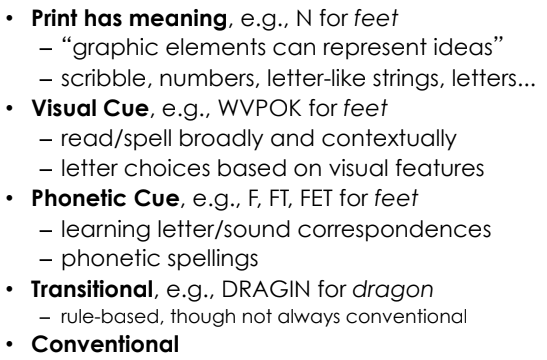
The different stages for this Development Spelling Word List (Ferroli & Shanahan 1987)
are below:
Upon analysing this, I have an almost overwhelming feeling of helplessness for these students. I can't even begin to imagine how hard things must be for them in class, especially during whole class teaching, when they struggle to make connections between letters and sounds. This then moves onto putting letters (and sounds) together to form actual words.
Despite my feelings about this, this target group of students are quite up-beat about their learning. They are definitely enjoying the activities and realisation that learning can be fun!
My next steps will be to see how the testing with Donna goes next week and go from there. Running records will also be starting soon and I'll be reporting on how that goes in a few weeks time.
Thursday, 11 April 2019
Preliminary findings
As we come to the end of Term 1, I've started collecting some baseline data and evidence of the nature or extent of the student challenge. My previous post shared the tools and approaches I'd planned to use so here are my preliminary findings.
1. HFW Test - This test was conducted 1-1 and consisted of 77 words from Magenta reading level to Orange (Level 15). Students simply read each word going across the page. I tried to note down just like running records their attempts and self-corrections during the test. Here is what the test looks like.


1. HFW Test - This test was conducted 1-1 and consisted of 77 words from Magenta reading level to Orange (Level 15). Students simply read each word going across the page. I tried to note down just like running records their attempts and self-corrections during the test. Here is what the test looks like.

Here are the test results of all 8 students.
A few of the students felt very frustrated as they recognised some of the words as words they've read before but on its own, they couldn't pinpoint what the actual word was. The showed me that they knew the patterns or sentence structures used in the texts they read that they were not paying attention to the actual letters forming the word, but rather "oh 'where' is normally the start of the sentence when they are looking for something". They only look as far as the first letter, then start guessing all the words they know that start with that letter.
2. Student Voice Survey - I conducted this as a group as they needed a lot of help to understand the questions as well as someone to record their answers. This also helped as they were giving each other ideas which they wouldn't be able to get on their own. Here are their responses.

I could tell by their excitement and rush to tell me more, that they felt quite important being asked what they thought of their reading lessons. I need to remember to do this more often so they can see the value of their learning and teachers actually wanting their input into how they learn in reading and writing time.
3. Weekly Reflections and Observations - This was normally jotted down onto whatever piece of paper I had lying around then put into my diary for a later date. So far I have a diary full of reflections based on just this group alone. Here is a summary of my reflections in term 1.

Thursday, 4 April 2019
Tools, Measures and Approaches
Describe the tools/measures/approaches you plan to use to get a more detailed and accurate profile of students’ learning in relation to that challenge. Justify why you chose these approaches and tools.
Kahui Ako Achievement Challenge 5: Improve the achievement of students with special needs in the learning areas of English/ key competency using symbols, languages and texts.
My inquiry problem/ challenge: Students who are 'stuck' in their learning 2-3 years behind where they should be at for Year 7 and 8 getting ready for College.
One of the reasons why I chose this challenge, was because this particular group of students had not made much - if any - shift in their reading age for the last 2 years. A look back at their records is shared in my blog post about 'Why I've selected this challenge'
To measure how much 'new knowledge' students are learning or picking up, I plan to use the following tools and approaches:
- HFW Test (High Frequency Word Test): This test has sight words up to reading level 15 or Orange. This is a great indicator for students who recognise words they are reading daily. Very quick test to administer.
- Student Voice Survey: This would be very informative for my teaching so I'd know whether students like/enjoy the task they are given. Are instructions easy to follow? Do they feel like they get enough 'teacher time' in class. This could reinforce or change the way I teach for sure!
- Running Records: The 'ideal' aim is to improve their reading ages to enable students to cope with the academic workload required of them in College. Because PAT test don't give us behavioural/ learning difficulties related to reading, a running record every 4 or so weeks would be more informative for both students and myself.
- Weekly Reflections/observations: Completing this straight after reading sessions would be useful in moving forward with this target group of learners. - Seek help/advice/ideas from CoL across schools teachers: I have already had a meeting with Clarelle Caruthers who has helped me with iPads and how to set up my site so it's easier for this group of learners to access and navigate. I've also made an appointment with Donna Ryan for the holidays to set up a plan of attack how I can better assess and cater for this group of target students.
Thursday, 28 March 2019
Why is it catalytic?
Explain why you judge this to be the most important and catalytic issue of learning for this group of learners this year (In chemistry, a catalytic substance is one which increases the rate of reaction, but it also offers an alternate path for the reaction to follow).

My previous post shared anecdotal notes and levels from past years for my target students. I feel this gives insight into how 'stuck' these students have been throughout their years up to Years 7 & 8. This chart is a quick summary of where they are now in Term 1 of 2019.
Reading mileage and vocabulary acquisition through the scaffolding of different strategies such as the TESOL strategies. This is what I judge to be the most catalytic issue of learning for this group of students. There are 3 Y8 students and 5 Y7 students.
I believe that unlocking this catalytic issue would open learners capabilities towards accessing the wider curriculum. It would also set them up towards coping with learning in high school.
Subscribe to:
Posts (Atom)